If You Like The Dream Hotel…
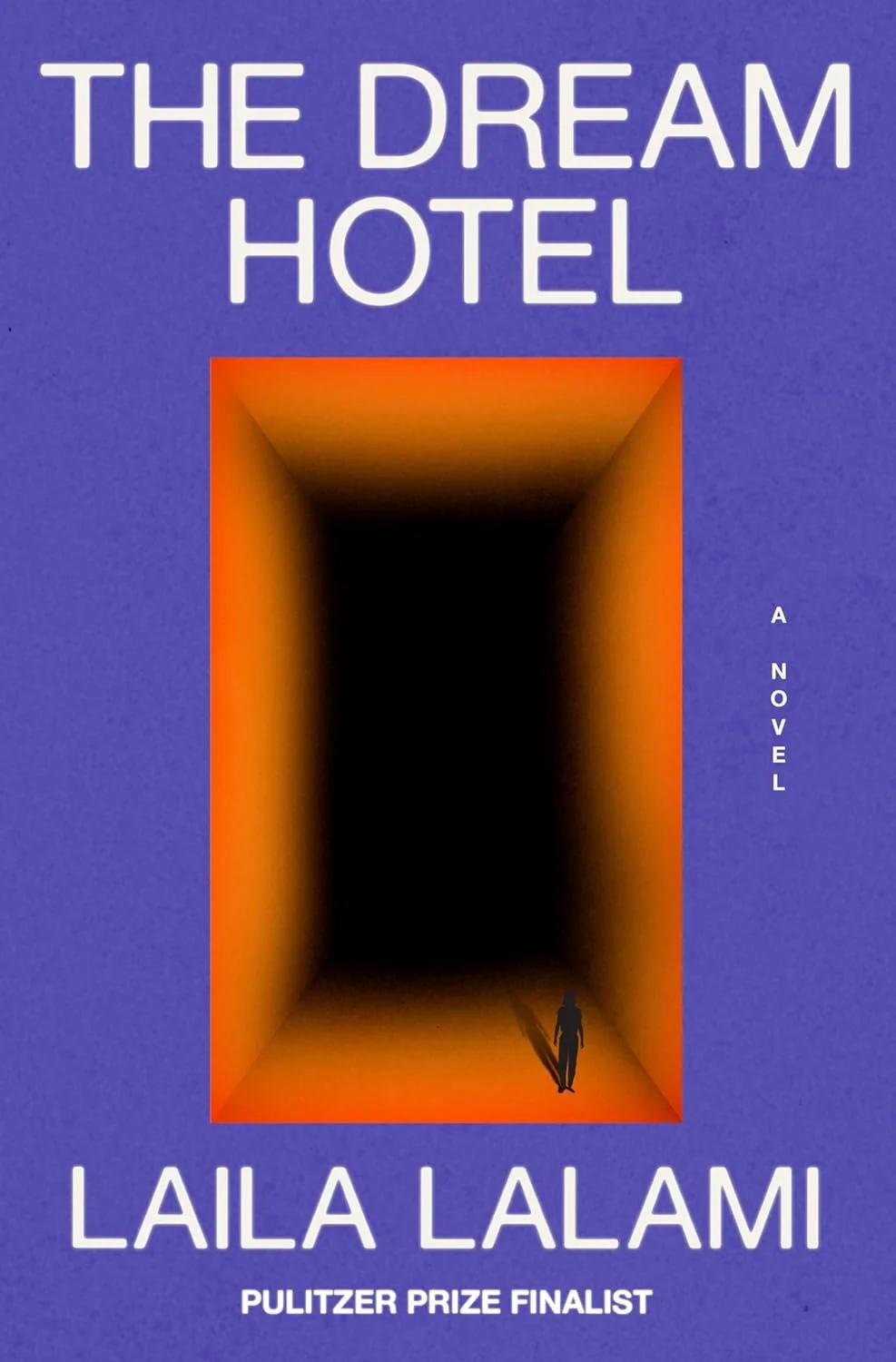
The Dream Hotel by Laila Lalami (2025) is a tale of government overreach, a society under surveillance, and life in retention. Sara is on her way home from a conference, anxious to see her husband and infant twins, when she is flagged by the Risk Assessment Administration. Her score is too high, she may be a danger to her husband, so she must stay in a retention center for observation. The scores are based on information from people’s digital life — your computer searches, your emails, and your dreams (tracked by a sleep-aid implant). Sara bristles against the injustice of detention for something she hasn’t done, but any act of subordination, any infraction, adds time to her stay.
The read-alikes below share elements of surveillance, captivity, and a questioning of governments that purport to act for the good of society.
1984 by George Orwell (1949)
The classic tale of government surveillance. A province of a superstate is ruled by the mysterious Big Brother. The Party and its Thought Police remove anyone who does not conform. Winston’s job is to rewrite history to fit the current regime. He falls in love with another ministry worker and is enticed by an underground resistance movement.
Blindness by José Saramago (1995)
A city is hit by an epidemic of sudden blindness. Those afflicted are sequestered in an asylum. Among the people is an ophthalmologist and his wife. She has not become blind but feigned the illness to stay with her husband. As conditions in the asylum deteriorate, the wife leads a group to freedom, only to discover that society out of captivity has fallen into chaos.
The School for Good Mothers by Jessamine Chan (2022)
This scorching depiction of motherhood takes place in a near-realistic totalitarian regime where mistreatment of children by their parents leads to punishing incarceration, in the guise of a training center. I was struck by how many layers of judgment Chan exposed — the government’s and expert’s judgment, of course, but also our self critique and that of our peers. While I sympathized with the characters, thinking that the punishment did not fit their crime, I also found myself thinking, “but at least I’d never do anything like that!”
The Measure by Nikki Erlick (2022)
On a day in March, everyone over the age of 22 receives a box with their name on it (younsters end up receiving their boxes when they turn 22). Inside the box is a string. On the box is written: “The measure of your life lies within.” Folks realize that the length of the string foretells the length of the person’s life. The appearance of the boxes raises questions and pressure. Where did the boxes come from? Should you look at your string or is it better not to know? What if your partner’s string is not the same length as yours? The questions move from personal reflections and relationships to the public sphere. Fear of the desperation of short-stringers leads people to suggest different jobs, different health care, etc. — which leads to discrimination and dissent.
Our Missing Hearts by Celeste Ng (2022)
Bird, who is 12, lives in a dystopian world controlled by the PACT Act, a racist policy said to preserve American culture. Bird’s mother, who is Asian, has disappeared years before. When he gets a message he believes to be from her, he sets off to find his mother and learn her secrets.